
This project forms part of the call for R&D projects, funded by the CDTI and carried out during the period 2020–2023.
What is the need for this project?
This project addresses the need to develop more efficient fertilisers that minimise the environmental impact and soil degradation caused by traditional chemical products, thereby promoting zero-waste agriculture.
Project objective: To develop IONIC, an innovative nutritional and biostimulant product formulated from plant bioextracts subjected to proprietary biotechnological processes, enriched with amino acids and seaweed extract (Ascophyllum nodosum). Designed to maximise nutrient uptake, mitigate abiotic stress and improve soil microbiota, it is 100% compatible with organic farming and ‘Zero Waste’ programmes.
MILESTONE 1: Characterise raw materials and select the technologies to be applied.
- Characterisation of the bioextract used: Natural concentrate of bioactive compounds that enhance crop vitality.
- POLYSACCHARIDES (ACEMANNAN): Improve water retention, stimulate natural defences and act as a bio-adhesive in foliar applications.
- NATURAL HORMONES (AUXINS/GIBBERELLINS): Natural growth regulators; stimulate germination, flowering and fruit set.
- VITAMINS (B, C, E) AND MINERALS: Cofactors that optimise metabolism and photosynthesis.
- SAPONINS AND PHENOLIC COMPOUNDS: Nourish beneficial soil microbiota and act as natural fungicides/bactericides.
- ENZYMES (BRADYKINASE, CATALASE): Reduce oxidative stress and improve root health.
2. Bioprocess used: IONIC employs sustainable bioprocesses (hydrolysis and controlled fermentation):
2.1. Use of endophytic microorganisms and enzymes: these transform complex molecules derived from plant extracts into low-molecular-weight biological compounds.
2.2. Result: increased bioavailability. The plant not only receives nutrients, but also absorbs them quickly and efficiently.
2.3. Synergistic activity: the plant’s natural matrix is preserved, in which vitamins, minerals and hormones act together (‘natural cocktail’ effect).
3. Development of the synergistic formula and agronomic effects:
The success of IONIC does not lie in a single ingredient, but in the synergy of three natural pillars enhanced by biotechnology:
Plant Bioextracts | Ascophyllum nodosum | Free aminoacids |
Technological effect: Acts as a natural carrier (penetrant) and stabiliser. Rich in polysaccharides (acemannan) | Biostimulant effect: A powerful stimulator of root formation and chlorophyll synthesis | Nutritional effect: Conservation of metabolic energy for the plant during times of stress. |
MILESTONE 2: Industrial-scale upscaling of the bioprocess and field validation (cucumber and tomato cultivation).
Greenhouse trials were carried out (at the TECNOVA Experimental Centre) comparing a control treatment (TA) with the IONIC treatment (TB), applied every 15 days.
- Tomato Cultivation:
Plants treated with IONIC (TB) showed an improvement in the nutritional quality of the crop without affecting its yield. Although no differences were observed in plant growth or fruit yield, its application significantly increased fruit quality, with higher levels of soluble solids (°Brix), lycopene, β-carotene and antioxidant activity compared to the untreated plants (TA). Furthermore, it promoted greater accumulation of essential nutrients in the leaves during the crop’s development.
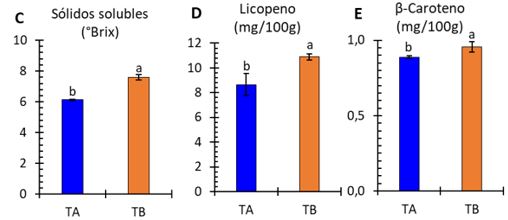
Figure 1. Tomato fruit quality parameters (TA: Control, TB: Treated)
- Cucumber Cultivation:
– Growth and yield (significant improvement): Unlike tomatoes, treatment with IONIC (TB) significantly increased the total yield and marketable yield of cucumbers, as well as the number of fruits harvested.
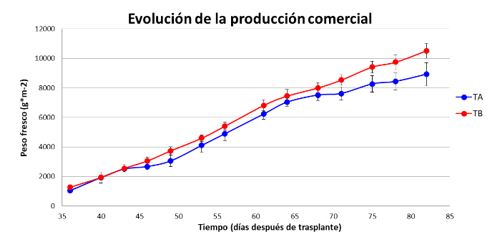 Figure 2. Changes in commercial yield during the cucumber growing season. Yield increased by 18% in the treated plants (TB) compared with the control (TA).
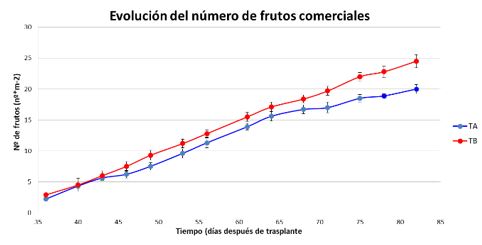
Figure 3. Changes in the number of marketable fruits during cucumber cultivation. There was a 25% increase in the treated plants (TB) compared with the control (TA).
-Root system: The roots of the treated plants were significantly longer and had a higher fresh weight than those of the control group.
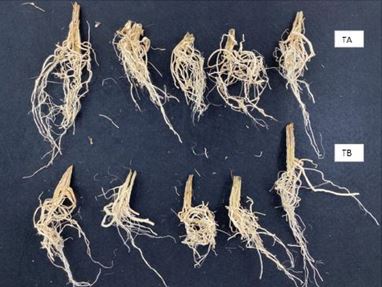
Figure 4. Difference between the roots of untreated plants (TA) and treated plants (TB).
– Quality and nutrition: The fruit had a higher nutrient content (Ca, P, Mg, K, Na, Zn) and greater antioxidant activity, although there was a slight reduction in firmness and soluble solids (°Brix).
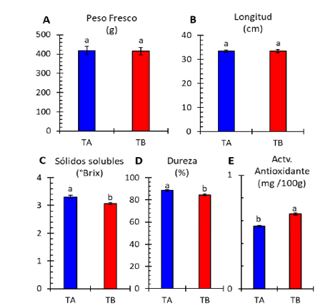
Figure 5. Functional quality parameters of commercial cucumber fruits.
A) Fresh weight (g). B) Fruit length (cm). C) Total soluble solids content (°Brix). D) Dry matter content (%). E) Antioxidant activity (mg of ascorbic acid/100 g of sample) in fruits from TA (untreated) and TB (treated) plants.
- Conclusions and final product:
– Efficacy as a biostimulant: IONIC has been shown to be a potent biostimulant. It improves the nutritional and functional quality of tomatoes, increases the yield and root development of cucumbers, and protects crops against abiotic stress.
– Mechanism of action: Its main components – polyphenols (antioxidants, membrane stabilisers and cell signalling agents) and polysaccharides (energy supply and cellular strengthening against water stress) – are responsible for activating the plant’s metabolism in a balanced manner.
– Technical data sheet for the final product:
o Name: IONIC
o Dosage: 3-4 L/ha
o Frequency: Applications every 15 days from transplanting until the first flower bud appears.
o Recommended use: Phases of intense vegetative development and fruit growth, particularly under conditions of high abiotic stress.